

I wanna give you emotion; how Kemi Badenoch's speechwriters balanced linguistic gloom and hope in her party conference speech
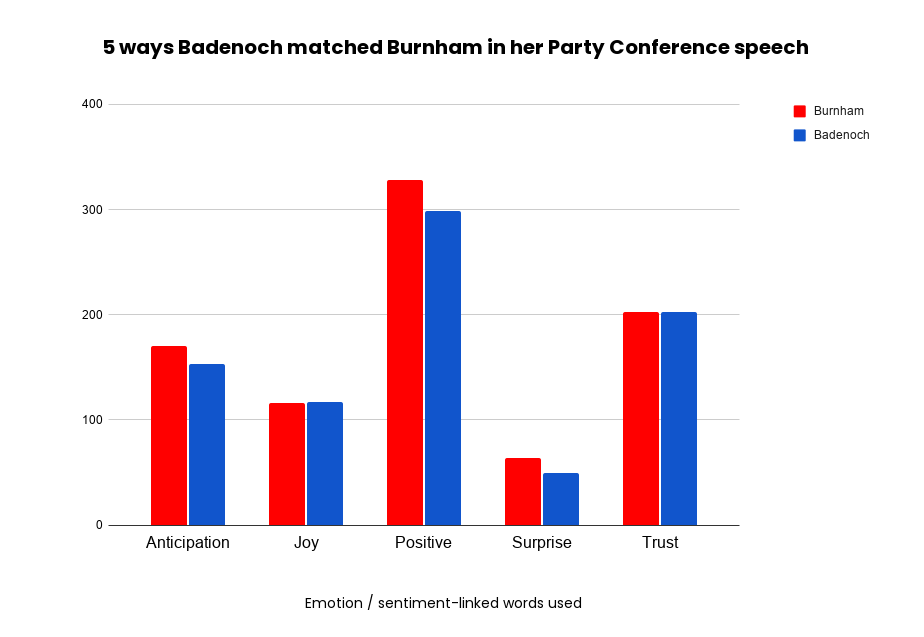
It won't come as much surprise that Conservative Kemi Badeoch's leader's speech on Wednesday at the Conservative party conference 2026 differed in many ways to that of Labour PM Andy Burnham's one week earlier.
But what was perhaps a little more surprising was just how similar - very similar - they were when it came to use of some emotion-linked language. What do I mean by this?
By running the speeches through their 60-minute speeches through the NRC Word-Emotion Association Lexicon we can see that Andy and Kemi used exactly the same number of words associated with the emotion Trust.

And almost exactly the same number of words associated with Joy. Counts of words associated with Anticipation and Surprise were very similar, while total Positive words were also pretty much the same.
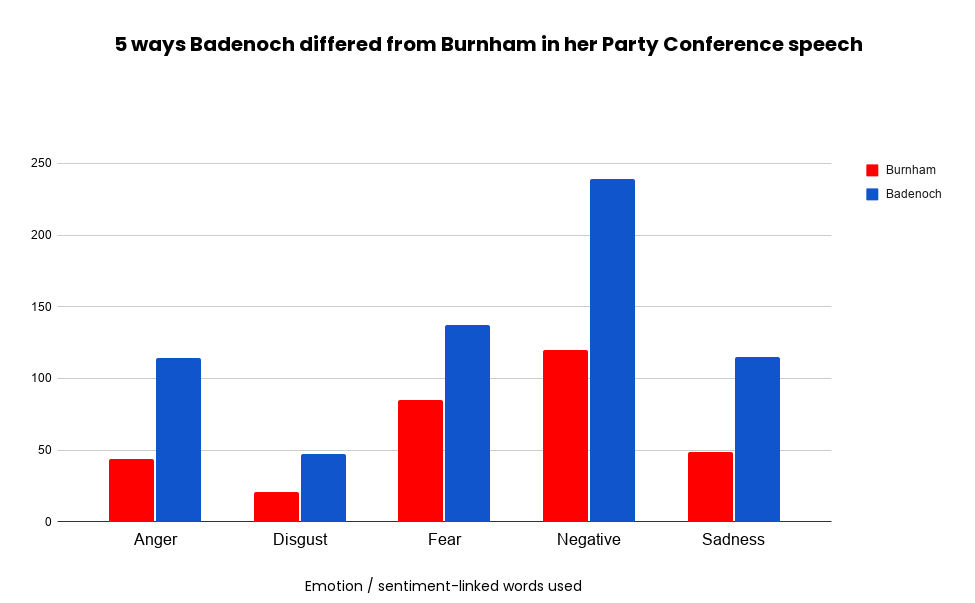
Where they really differed was in Badenoch's use of words associated with more negative emotions.
Although her speech contained 300 fewer words than the PM's, she used double the number of words associated with Anger, Disgust and Sadness - and more than double the number of negative words Burnham deployed to make his pitch to the nation.
Now, given Badenoch's position as leader of the main opposition party, this liberal use of words associated with negative emotions isn't perhaps that surprising. Badenoch was playing to a partisan home crowd, and rabble rousing attack lines were of course to be expected.
But to me as a communicator it's interesting that while highlighting problems and issues Badenoch argues the country is facing as a result of a Labour administration, there is also a big effort in the language to keep that in proportion and ALSO match Burnham on the positive 'hope' piece.
If you're tasked with writing speeches - or indeed any type of content that seeks to put across a position - it's worth considering how you keep the right balance between positive and negative emotion through thoughtful and deliberate use of language.
Natural language processing and textual analysis techniques like these can provide extra insights to skilled communications professionals, helping you do your work better, improving the resonance of your overall output and ultimately securing better outcomes.
Now, given Badenoch's position as leader of the main opposition party, this liberal use of words associated with negative emotions isn't perhaps that surprising. Badenoch was playing to a partisan home crowd, and rabble rousing attack lines were of course to be expected.
But to me as a communicator it's interesting that while highlighting problems and issues Badenoch argues the country is facing as a result of a Labour administration, there is also a big effort in the language to keep that in proportion and ALSO match Burnham on the positive 'hope' piece.
If you're tasked with writing speeches - or indeed any type of content that seeks to put across a position - it's worth considering how you keep the right balance between positive and negative emotion through thoughtful and deliberate use of language.
Natural language processing and textual analysis techniques like these can provide insights to help you do your work better, improving your overall output and ultimate outcomes.